

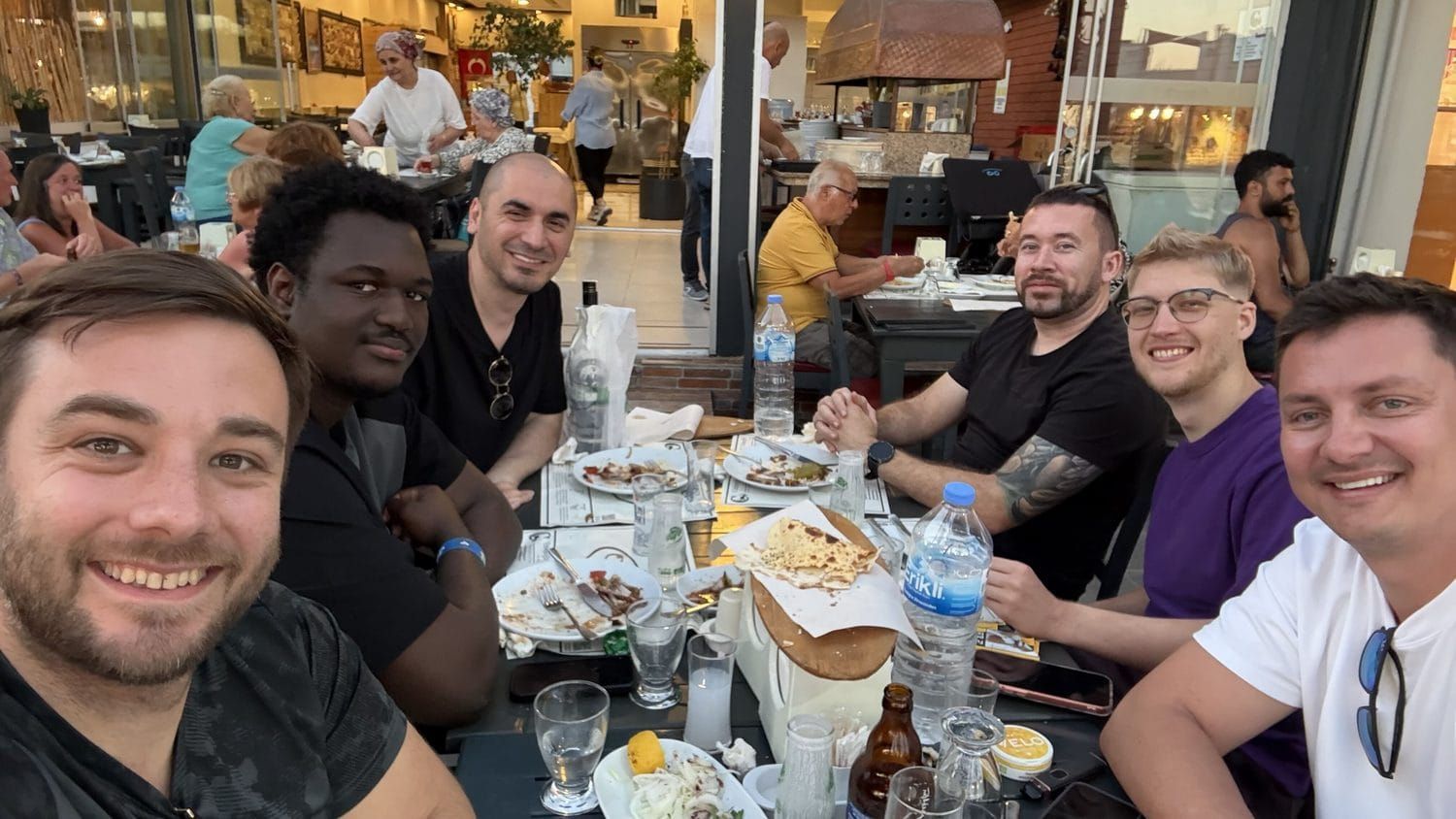
This June, six of us, the core of Lua's platform team, flew to the same stretch of Turkish coast, rented a house, and built together for two weeks.
When the dust settled, I pulled the numbers straight from GitHub. In fourteen days we merged 525 pull requests. That's roughly a quarter of everything the team has shipped all year, delivered in a single fortnight, at about 4× our normal pace. I'll be as honest about that figure as our internal report was: merged PRs measure throughput, not genius, and the team-level 4× is the number I actually trust. But it's real, and it's not a rounding error.
I could stop there. Every founder loves a chart that goes up and to the right. But the chart is the least interesting thing that happened those two weeks, and if it's all you take from this post, you'll learn exactly the wrong lesson.
The math, because someone always asks
Let me get the ROI out of the way first, because if you're a CEO or a CFO it's the thing you're already thinking.
The numbers below are illustrative, and I'm going to count them in beers: partly because it's funnier, partly because it's the one unit this team reliably agrees on. The shape is exactly right.
Quick note on the beers: it's a unit of fun, not finance. The ratios are real, the absolute number is invented, and I'd genuinely rather you didn't reverse-engineer anyone's salary from a bottle of lager. You'll get it wrong, and we'll both feel weird about it.
Fully loaded, a senior engineer costs us about 2,000 beers a month. Six of them for two weeks is 6,000 beers of payroll. Add the offsite itself (flights, a house on the coast, two weeks of food, and a genuinely heroic beer-and-Rakı budget) and call it another 6,000 beers. So the fortnight cost us on the order of 12,000 beers, all in.
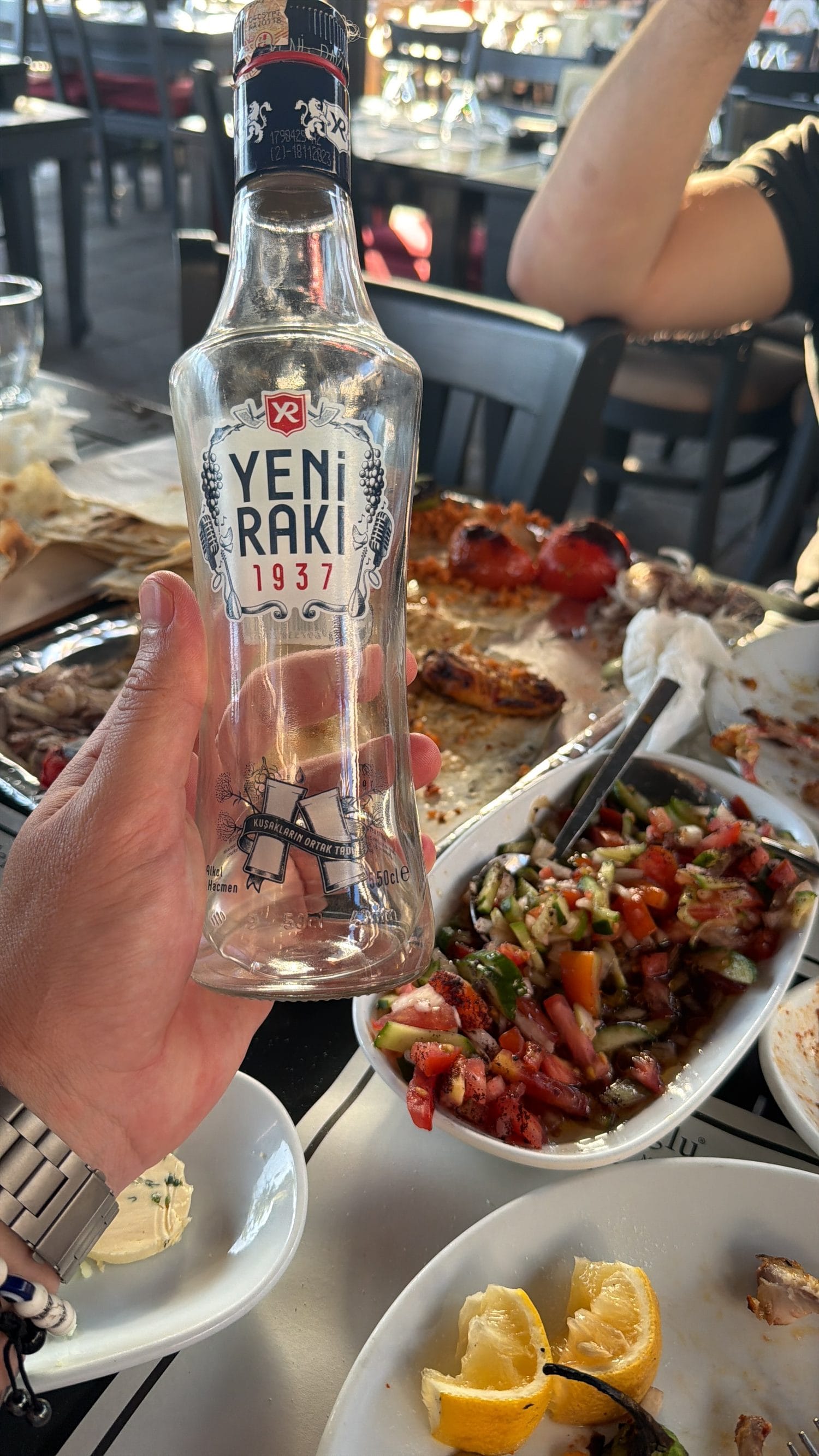
What did 12,000 beers buy? We ran at 4× our normal pace, so two weeks produced what would otherwise have taken us eight. Eight weeks of this team, at our usual rate, runs about 24,000 beers of output. We got it for 12,000: half-price work, plus six weeks of calendar pulled out of thin air. For a startup in a race, calendar is the one currency that doesn't refund.
And here's what makes it a no-brainer rather than a nice-to-have. Even if I funnelled three-quarters of that saving straight back, ran one of these every single quarter, all year long, we'd still be buying back month after month of roadmap for a fraction of what it's worth. The expensive thing was never the house, or the bar tab. The expensive thing is a year that takes a year.
But here's the whole reason I'm writing: the spreadsheet is not why I'd do it again.
The part that doesn't fit in a spreadsheet
We did not work eighteen-hour days. Let me kill that myth on the way past.
We worked hard. Properly, deeply hard. And then almost every evening we ate dinner on the beach, drank too many beers, worked our way through Turkey's national talent for Rakı, drove to towns none of us had seen, and more than once ended the night dancing. We played as hard as we worked, and that wasn't a distraction from the output. I'm now fairly sure it was the output.
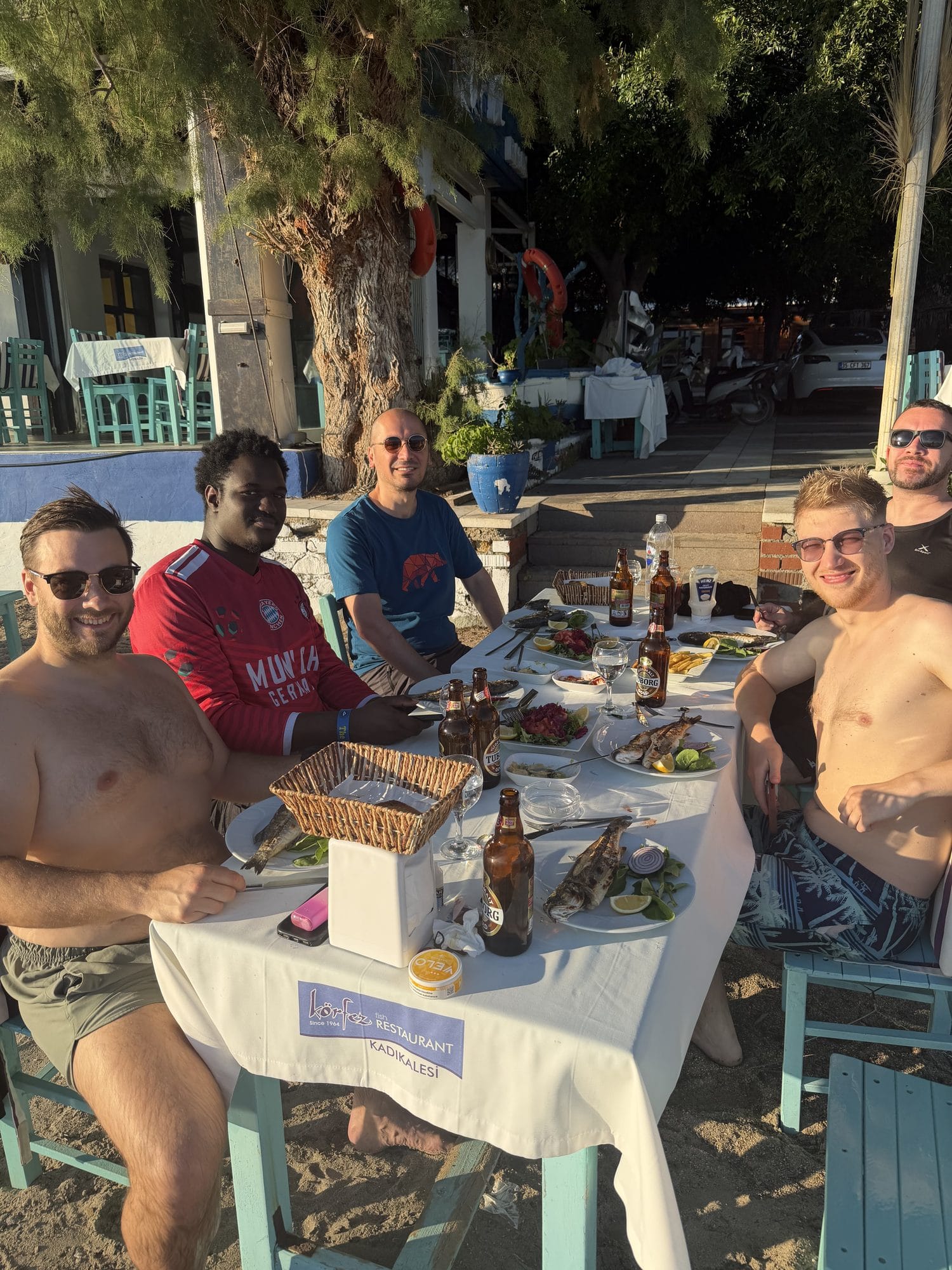
You can't put it on a balance sheet, but every person on that team came home with something they'll carry for the rest of their life: shared meals, in-jokes, a story about a wrong turn on a mountain road, the particular trust you only get from seeing each other tired, unguarded, and laughing. The research is blunt about this. Psychological safety is the single biggest differentiator of high-performing teams in Google's Project Aristotle, and you do not build it in a stand-up. You build it over a third beer when someone finally tells you what's actually going on in their life.
What leadership actually is
Here's what fourteen days in a house with your team teaches you faster than fourteen months of one-on-ones: leadership is not assigning work.
Leadership is setting one clear, ambitious goal, then getting each person to their best by understanding what actually drives them. Decades of motivation research land in the same place. Deci and Ryan's Self-Determination Theory shows that people do their most creative, most durable work when three needs are met: autonomy, competence, and relatedness. Not pizza. Not ping-pong tables. The freedom to own the problem, the room to get good at it, and people they belong to.
My job that fortnight wasn't to hand out tickets. It was to know that one engineer needs a hard problem and total silence; that another comes alive the moment you put him in front of people; that a third will quietly carry the most dangerous work on the platform and never once tell you it's heavy. It was to understand the composition of the team, where we're strong and where the stress points are, and to design the two weeks around the people, not the backlog.
Because this is the thing I most want every CEO and CTO reading this to hear, and every engineer to be able to forward to their leader without saying a word:
A backlog is never just a backlog. It is your people's time, their talent, and a finite slice of their one life.
Treat it as a queue of tickets and you'll get a queue of tickets closed. Treat it as the best years of a handful of brilliant people and you'll get something that looks a lot like 4×. Engineers feel the difference instantly. They always know which one they're being managed as. So if you want your team to step up, step up first: learn what drives each of them, protect their focus like it's the asset it is, and put them in the rooms, real or rented, where they do their best work.
Why I don't want an office
This is where I lose some people, so I'll be direct: I don't believe in an office for an engineering team, and I'm not going to get one.
Engineers skew introverted, and introverts do their deepest work in protected, quiet space, not in the open-plan rooms we keep building for them. The data here is brutal. When Harvard's Ethan Bernstein and Stephen Turban studied two companies moving to open-plan layouts, face-to-face interaction fell by roughly 70% while people retreated into Slack and email. The open office doesn't manufacture collaboration; it destroys the focus engineers live on and then pushes the conversation private anyway. Meanwhile Stanford's Nick Bloom found, in a randomized trial, that remote workers were 13% more productive and half as likely to quit. Remote-first isn't a concession. For this kind of work, it's the better default.
But remote-first has one honest cost, and I won't pretend otherwise: culture doesn't accumulate on its own when nobody shares a room. A steady trickle of Slack messages never becomes a relationship. And the research on distributed teams is oddly precise about the fix. Riedl and Woolley found that the best remote teams don't communicate in a constant drip; they communicate in intense bursts: periods of high-bandwidth, all-in togetherness, followed by long stretches of heads-down quiet.
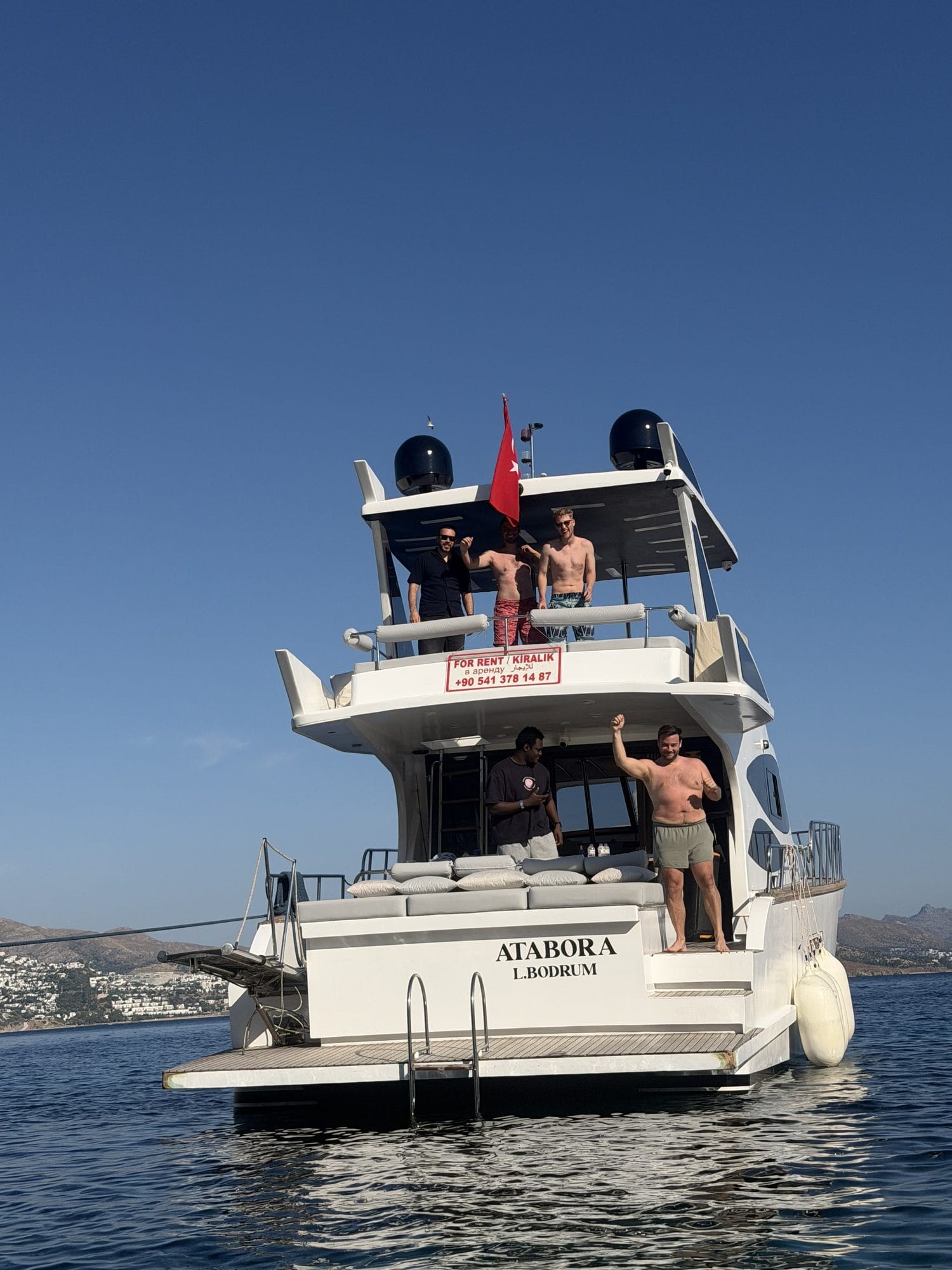
That is exactly what an offsite is. It's the burst. It's how you build culture without an office. You don't trap everyone in a building five days a week; you put them on a beach for two weeks, twice a year, and let them be remote and brilliant the rest of the time. Culture is not built at desks. Ours got built over Rakı.
So, what did we build?
This is the part where I'm going to be a little annoying.
We shipped a lot. Entire platforms that went from nothing to production. Foundations we'd wanted for a year. And a couple of things I am genuinely not ready to talk about yet. Some of it you'll see soon. One of them, in particular, I think is going to change how people experience Lua entirely.
So I'll leave it here: something big is coming. We built it on a beach, between dinners, with the best team I've ever worked with.
When it's ready, I'll tell you exactly what it is.